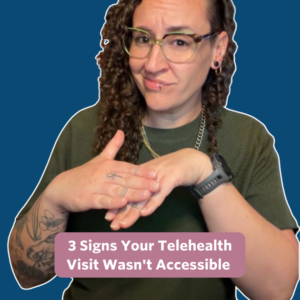
Telehealth has transformed healthcare, but challenges still persist for many deaf patients, resulting in an inequitable gap of services and care. In a recent interview, DeafHealth explained the experiences and consequences of existing telehealth services:
- Lack of captioning and interpreter options: Many telehealth platforms do not offer captioning or the ability to add an interpreter, making it impossible for deaf individuals to fully participate in appointments.
- Difficulty in scheduling appointments: Deaf patients may encounter challenges scheduling appointments, as some healthcare providers may not be familiar with or able to use video relay services and other accommodations.
- Inadequate support: Deaf patients may experience abrupt appointment cancellations or changes, difficulties in contacting healthcare providers, and a lack of responsiveness to their needs.
As a result, patients can avoid seeking care. One deaf patient put it simply: “being hung up on like that and unable to fully participate with my doctor was demeaning. What happened to me is a very common experience for deaf and hard of hearing individuals seeking telehealth services and a large reason why we avoid it.”
Check it out:
https://www.kxxv.com/news/national/challenges-with-telehealth-persist-for-deaf-patients-and-others
Stay Informed in ASL: We’ve got you covered! Sign up with your email at deafhealthaccess.org/sign-up or follow us on social media for new and current health updates.