NEW FINDINGS: Telehealth use by physicians has nearly tripled since before COVID-19 hit, yet telehealth still isn’t working for many Deaf ASL users. Through a bilingual ASL and English survey of 150 Deaf and hard of hearing adults, key findings included:
- 6 in 10 faced at least one barrier during a telehealth visit
- 81% wanted an ASL interpreter, but only 45% got a qualified interpreter as requested
- Only 17% of those who used an interpreter were “very satisfied”
- More than half said their telehealth platform was only partly accessible or not accessible
- 45% of those who reported a challenge said their provider was unaware of it or didn’t do enough
- 44% did not fully understand their provider’s information
When platforms lacked clear interpreter integration, deaf patients often had to fix problems themselves like setting up a separate screen for Video Relay Services (VRS), whose interpreters may not have medical training or appointment details.
When it works, telehealth helps. 60% liked not having to travel. But as one person shared: “Telehealth can be helpful, but only when communication access is planned from the beginning.”
Based on the survey data, a national Deaf Patient Coalition set priorities for future research:
- Provider readiness
- Platform readiness
- Interpreter quality
- What happens when access fails
- Accountability
- Privacy and consent
Click here to read the full brief
This work was funded through a Patient-Centered Outcomes Research Institute® (PCORI®) Eugene Washington PCORI Engagement Award (EACB-35309). The views presented in this work are solely the responsibility of the author(s) and do not necessarily represent the views of the Patient-Centered Outcomes Research Institute.
💻Healthcare Support: Helping you understand, choose, and access care through our CareLine at 445-275-2273.
✉️Stay Informed: Subscribe at deafhealthaccess.org/sign-up or follow us on social media for health updates.
#DeafHealth #Telehealth #AccessMatters
Video Description & Transcript
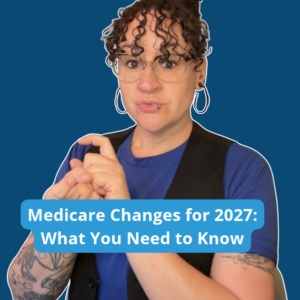
[Video Description: Bee, a nonbinary person with curly dark hair and glasses, sits in front of a dark blue background and signs “study” in ASL toward the camera. Bee wears a black top with hoop earrings, facial piercings, and visible arm tattoos. A light blue text box reads, “Deaf Patients & Telehealth: What We Found.”
[Transcript:
Slide 1:
On-screen text:
Is telehealth working for Deaf people?
Communication access matters.
✓ Qualified interpreters
✓ Working captions
✓ Prepared providers
ASL video:
Telehealth means seeing your healthcare provider remotely by video. But for Deaf patients, it only works when communication is accessible.
That means having a qualified interpreter you can clearly see, captions that work, and a provider who knows how to use them.
Slide 2:
On-screen text:
We asked Deaf people about their telehealth experiences.
150 Deaf & Hard of Hearing adults participated
PCORI-funded project
ASL video:
As part of our PCORI-funded project, we worked with a national group of Deaf patients and experts. Together, we created a survey in ASL and English. Then 150 Deaf and Hard of Hearing adults shared their telehealth experiences.
Slide 3: Telehealth barriers
On-screen text:
6 in 10 deaf people
faced at least one barrier when using telehealth.
ASL video:
Our survey showed that telehealth still isn’t working for many Deaf ASL users. Six out of ten people experienced at least one problem during a telehealth visit.
Slide 4: Interpreter access
On-screen text:
Interpreters matter during telehealth visits.
81% wanted an interpreter
45% got a qualified interpreter
17% were very satisfied
ASL video:
For Deaf ASL users, interpreters were especially important for their teleheath visit. Eighty-one percent said having an interpreter was a top feature they wanted.
But only 45% got a qualified interpreter when they asked. Of those who used an interpreter, only 17% were very satisfied.
Slide 5: Technology barriers
On-screen text: More than half said their telehealth technology was not fully accessible.
– Captions not always visible or accurate
– Difficulty adding or seeing an interpreter
ASL video:
More than half of deaf people said their telehealth platform, portal, or app was not fully accessible.
Captions weren’t always visible or accurate. It could also be difficult to add or see an interpreter.
Slide 6: Who fixes the problem?
On-screen text:
When telehealth fails, deaf patients often have to solve the problems themselves.
ASL video:
Many providers didn’t notice accessibility problems or didn’t do enough to fix them.
Deaf patients often had to solve the problem themselves, such as setting up VRS on another screen.
But VRS interpreters may not have medical training or information about the appointment, and the interpreter may change during the visit.
Slide 7: What should happen next?
On-screen text:
What should future telehealth research with deaf patients focus on?
- Provider preparedness
- Accessible telehealth platforms
- Interpreting quality
- When telehealth access fails
- Accountability
- Privacy & consent
ASL video:
The Coalition identified six priorities for future research.
How can providers and staff be better prepared to communicate with Deaf patients? How can telehealth platforms become fully accessible? How can we make sure interpreters are skilled and qualified?
We also need to understand what happens when communication access fails, who is responsible for fixing problems and helping patients report them, and how privacy and consent can be explained clearly to Deaf patients.
Slide 8:
On-screen text:
One participant said it best:
“Telehealth can be helpful, but only when communication access is planned from the beginning.”
Better access. Better communication. Better healthcare.
Thank you to our Coalition and everyone who shared their experiences.
ASL video:
One participant said it best: “Telehealth can be helpful, but only when communication access is planned from the beginning.”
Thank you to our Coalition and everyone who shared their experiences and input. Together, we’re working toward better healthcare for Deaf people.
Small footer: This work was funded through a Patient-Centered Outcomes Research Institute® (PCORI®) Eugene Washington PCORI Engagement Award (EACB-35309). The views presented in this work are solely the responsibility of the author(s) and do not necessarily represent the views of the Patient-Centered Outcomes Research Institute.]