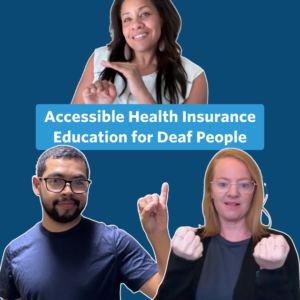
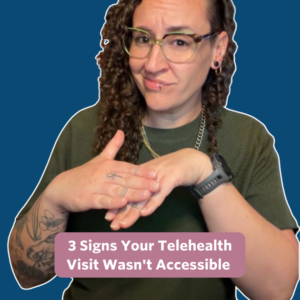
An overheard diagnosis in a waiting room. A pharmacist’s side-effect warning to the person ahead of you in line. A friend’s passing comment about symptoms they didn’t think twice about.
It’s called incidental learning, and it quietly shapes what people know about their own health. Deaf and hard of hearing people often miss critical information because it was never accessible to begin with.
DeafHealth closes that gap – with direct, accessible health information through our CareLine and health education resources. We advocate, educate, and partner to make healthcare work for you: www.deafhealthaccess.org.
Stay Informed in ASL: We’ve got you covered! Sign up with your email at deafhealthaccess.org/sign-up or follow us on social media for new and current health updates.
Video Description & Transcript
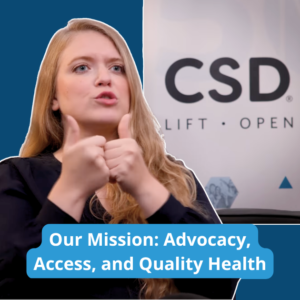
[Video Description: A video frame with a solid blue border surrounding Renca Dunn, a woman with dark hair styled in a high bun stands in front of a grey curtain. She’s wearing a black long-sleeved shirt, silver hoop earrings, and a necklace. She’s signing directly to the camera]
[Transcript: In general, many deaf and hard of hearing people don’t realize that in a doctor’s office, emergency room, and other similar situations, there are so many things happening at the same time. Most people who can hear have the ability to overhear what’s going on or catch passing conversations, absorbing information without even trying. These are subconscious cues to file this information away for the future, you’ll tell yourself, “I heard that happen,” or “I’m going to look into that later.” That’s incidental learning. Deaf and hard of hearing people miss out on that important information – which creates a huge gap. We don’t have the opportunity to think, “Wow, I heard that diagnosis,” “I’ve never heard of it,” or “I’ll look into it later.” Instead, we are left unaware, with no way to benefit that important information. We miss out on critical information. Incidental learning is what helps people become more aware of their health, aware of possible conditions and diagnoses. What deaf and hard of hearing people need is direct communication. We need someone to give us accessible health information directly, so we don’t have to rely on others or experience the burden in trying to find the information we need. We should get direct communication and direct exchange of health information with actionable tips to move forward. That’s how we close the gap: provide direct, accessible health information.]